
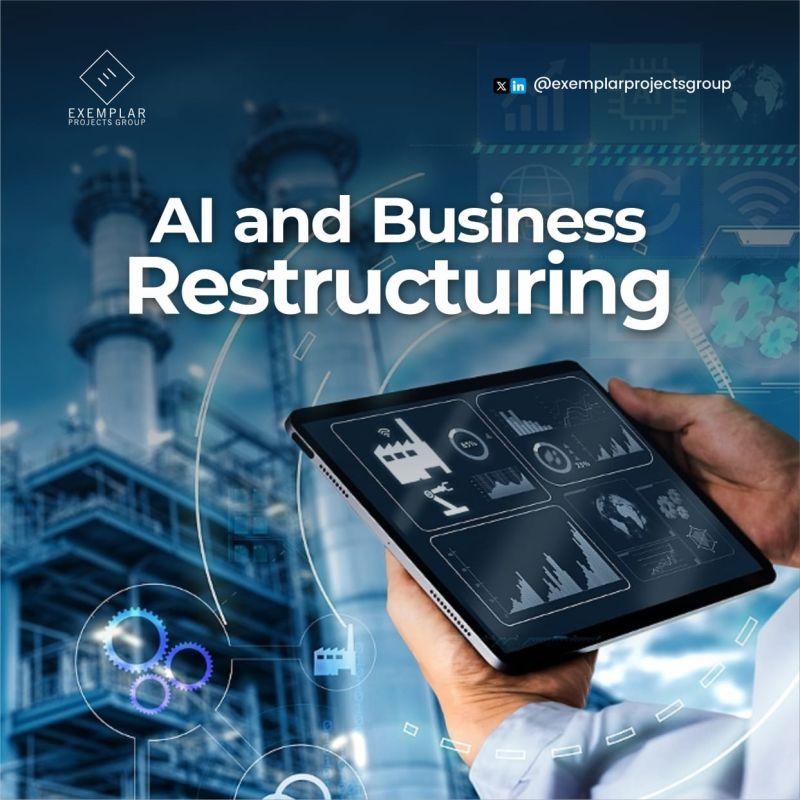
AI and the Future of Work: Replacement or Redesign?
2 July 2026
There was a time when artificial intelligence entered the workplace as a promise of support. It was introduced as a tool that would reduce workload, improve efficiency, and help people do their jobs better. But in recent times, that promise is beginning to sound different in corporate boardrooms.
Across industries, a quiet shift is unfolding. Companies are reducing headcount while increasing investment in AI systems. The language is often framed around efficiency and transformation, but the outcome is becoming increasingly consistent — smaller teams, faster systems, and fewer human roles in certain functions.
This shift is already playing out clearly in the technology sector. Companies such as Snap Inc., Oracle Corporation, and Meta Platforms have all announced workforce reductions while expanding their AI capabilities. For many organisations, AI is no longer just a productivity tool; it is becoming part of how work itself is being redesigned.
But beneath the surface of these decisions lies a more complex reality.
Many of these companies expanded aggressively during periods of rapid digital growth. Now, under pressure to deliver stronger margins and satisfy investor expectations, restructuring has become inevitable. In that context, AI sits in a dual position — it is both a genuine operational tool and, in many cases, a convenient justification for cost reduction.
This is where the conversation becomes more layered. Because while AI is improving speed and efficiency in specific tasks, it is still unclear in many organisations whether it is truly replacing jobs or simply accelerating restructuring decisions that were already economically unavoidable.
What research is beginning to show is even more nuanced. Productivity may rise in specific functions, but that does not always translate into overall organisational efficiency. In some cases, AI-generated output still creates additional layers of work — reviewing, correcting, and validating what the system produces. Work is not necessarily eliminated; it is redistributed.
And that reshaping raises an important question.
If businesses continue to optimise for speed and cost reduction alone, what happens to the human structures that hold organisations together? Culture, creativity, emotional intelligence, and judgment are not easily automated, yet they remain central to how businesses build trust and long-term value.
The companies that will likely sustain themselves in the long run may not be the ones that replace the most people with AI, but the ones that learn how to redesign work without eroding the human value within it.
Because in the end, AI may change how work is done, but it does not remove the need for the people who give that work meaning.
More articles
 Business Strategy
12 Sept 2026
Finding Opportunities in the Ordinary
 Business Strategy
17 Aug 2026
Africa's Next Big Export Isn't Oil: It's Innovation
 Digital Marketing
12 Aug 2026
The Real Competition in Digital Content Is Not Followers — It's Seconds
SWAVE Money
Ready to bank smarter?
Zero-data banking, instant transfers, and real rewards. Download SWAVE Money today.